

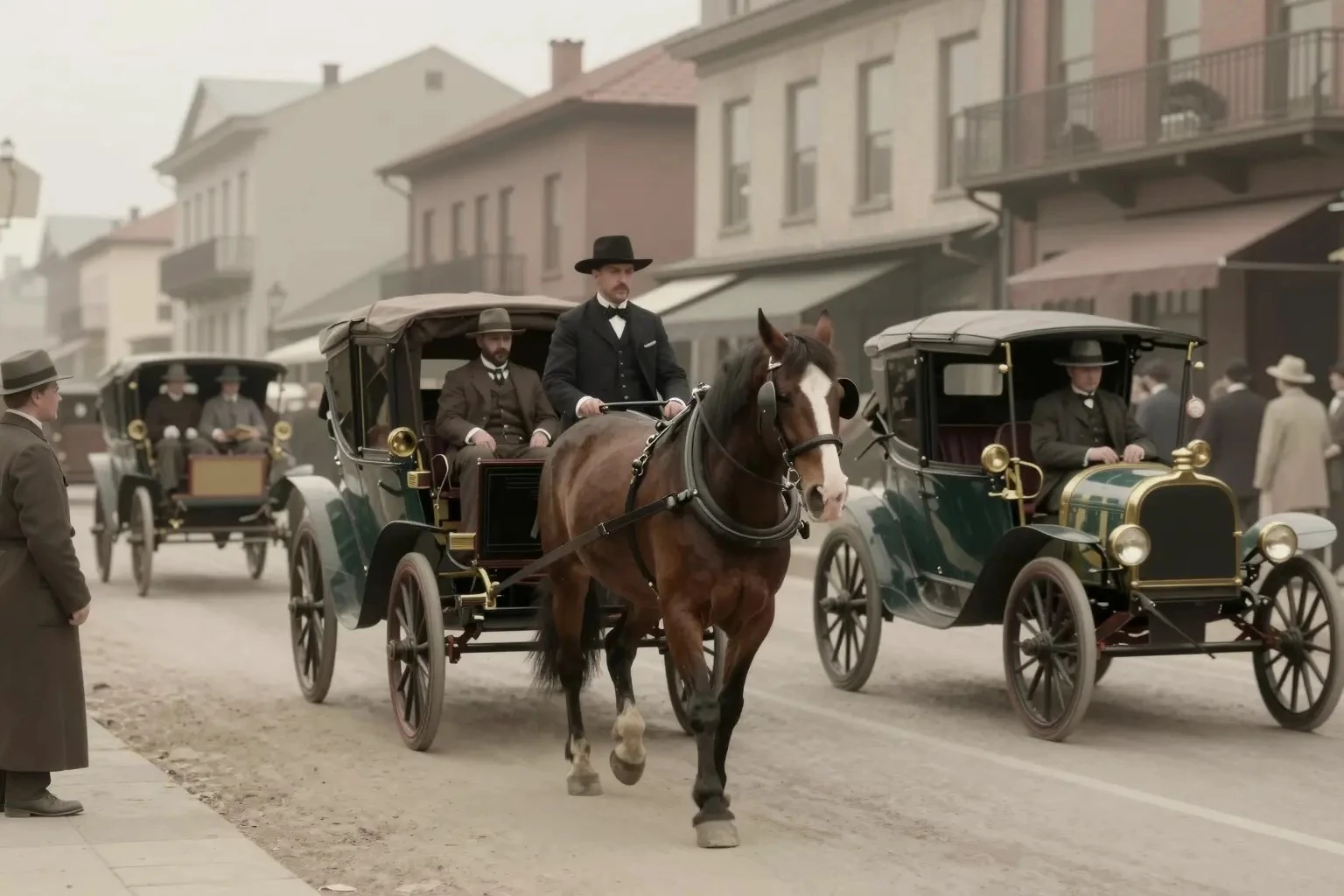
The evolution of automobiles has profoundly shaped transportation history, leading to significant societal and economic changes. This article explores the journey of cars becoming the main mode of transportation, highlighting key innovations, influential figures, and the impact on urbanization and infrastructure.
The Rise of Automobiles
Automobiles began gaining prominence in the late 19th century. However, it was the 20th century that witnessed their transformation into a dominant mode of transportation. The early motor vehicles were luxury items, accessible only to the wealthy. The breakthrough came with Henry Ford and the Model T.
Innovation and Mass Production
Henry Ford revolutionized the automotive industry with the introduction of the Model T in 1908. His innovation was not just in the car itself but in the method of production. By implementing assembly line techniques, Ford made mass production possible. This dramatically reduced costs, making automobiles affordable to the average person.
Urbanization and Infrastructure Development
The widespread adoption of automobiles necessitated significant changes in infrastructure. Roads and highways were developed to accommodate motor vehicles. This period saw a shift from reliance on public transit to personal mobility, influencing patterns of urbanization.
Impact on Society and Economy
As cars became more prevalent, they reshaped cities and economies. The rise of the automotive industry created numerous jobs, contributing to industrialization. The economic impact was substantial, with entire industries emerging around car manufacturing, maintenance, and fuel.
20th Century: The Era of Motor Vehicles
By the mid-20th century, cars had firmly established themselves as the primary mode of transportation. The expansion of suburbs was facilitated by the ability to commute, changing the landscape of urban and rural areas alike.
Infrastructure and Highways
The development of highways was crucial in supporting the growing number of automobiles. The establishment of interstate highway systems in countries like the United States connected distant regions, further promoting car travel.
Public Transit vs. Personal Mobility
Despite the rise of automobiles, public transit systems remained vital, especially in densely populated urban areas. However, the convenience and freedom offered by personal vehicles made them the preferred choice for many, leading to societal changes in commuting habits.
Economic and Societal Changes
The automotive industry’s growth had far-reaching effects. It played a key role in economic development, influencing global trade and creating a demand for resources like oil and steel. Societal changes were also evident, as cars enabled new lifestyles and leisure activities.
Cars became the main mode of transportation through a combination of innovation, industrialization, and infrastructure development. From the pioneering efforts of Henry Ford to the establishment of comprehensive road networks, the journey of automobiles reflects a significant chapter in transportation history. The impact on urbanization, economy, and society illustrates the transformative power of motor vehicles in the 20th century.